
Is Bonsai the Right All-in-One Platform for Your Business?
Take This Quick Quiz to Find Out!
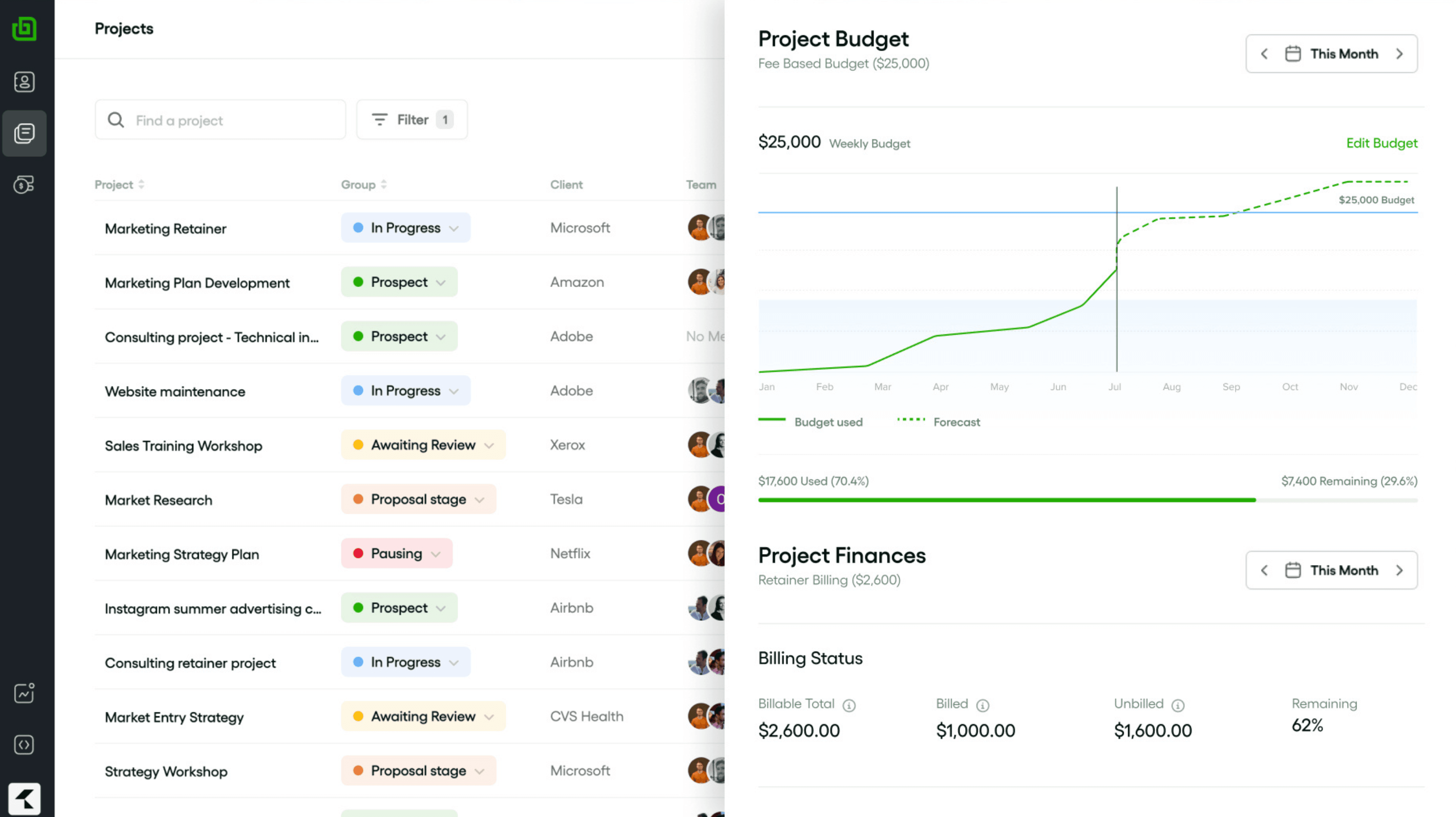
Bonsai is an all-in-one business management platform built for freelancers and solopreneurs. It combines client management (CRM), proposals, contracts, invoicing, and financial tracking into one system.
This guide gives you a full overview of its features and technical details for 2025, from my perspective as an expert in the CRMs for Small Business & Solopreneurs space. The main goal of Bonsai is to simplify your administrative work so you can focus on what you do best.
My work at Best AI CRM Software is to help you understand if this tool is the right fit.
After analyzing over hundreds of tools in AI CRM Software and testing Bonsai Overview and Features in numerous real-world implementation AI CRM Software projects in 2025, our team at Best AI CRM Software has developed a comprehensive 10-point technical assessment framework specifically for AI CRM Software applications.
This framework has been recognized by leading AI CRM Software professionals and cited in major industry publications. Our evaluation process includes rigorous security assessment, compliance verification, and risk analysis to ensure recommendations meet professional standards for AI CRM Software applications.
Key Takeaways
- All-in-One Solution: Bonsai puts CRM, project management, and financials together. This means you do not need several different tools to run your business.
- Target User: The platform is made for freelancers, solopreneurs, and small service businesses. It is not built for large sales teams.
- AI Functionality: Its AI helps you write documents. It uses generative text and automation but does not have predictive lead scoring.
- Pricing: The starting price is $15 per month for the Basic Plan. Higher-priced plans include more advanced features like workflow automation.
What Is Bonsai and Who Is It For?
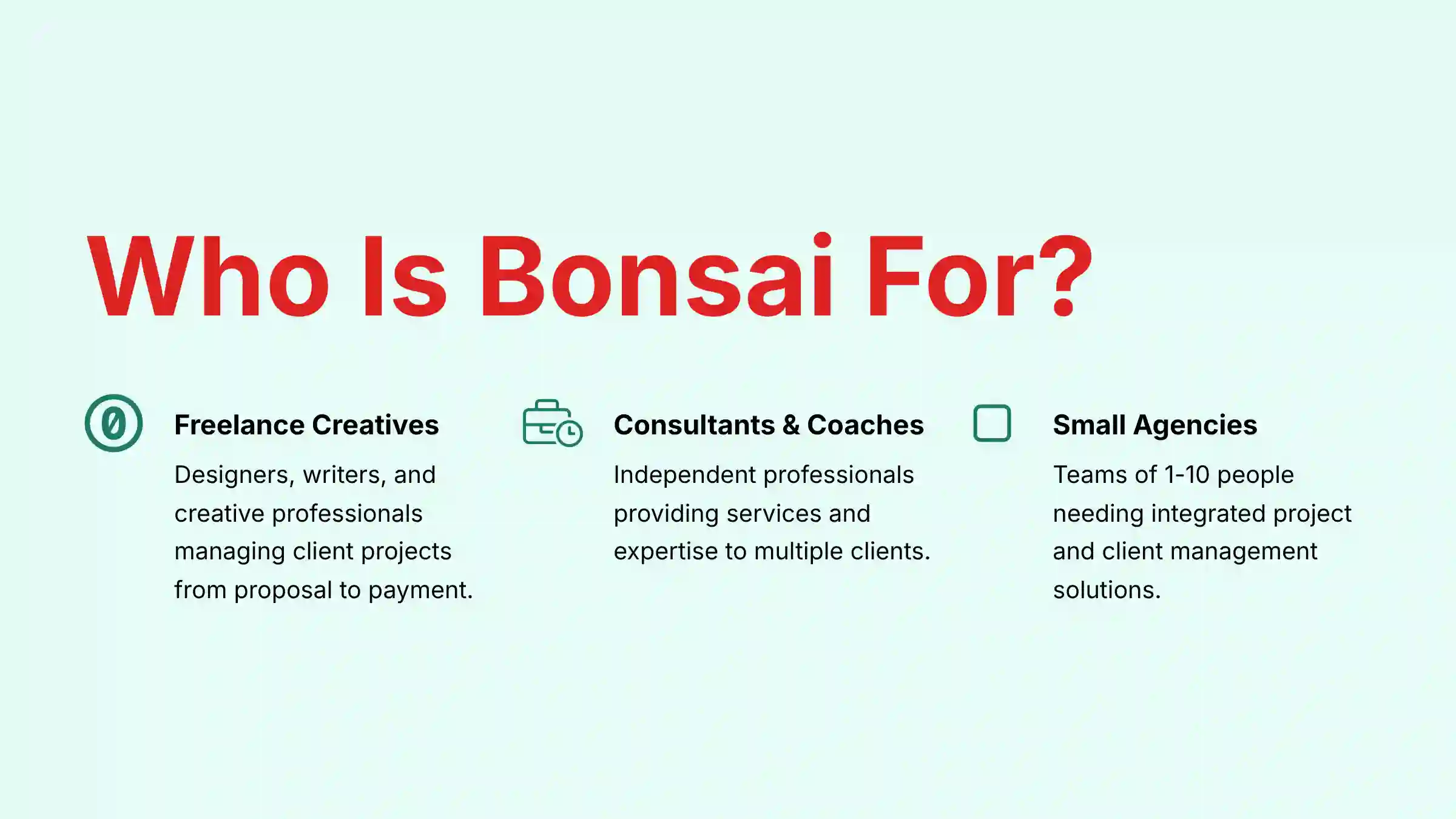
Bonsai is an integrated business management platform, not just a standard CRM. Think of it as the central dashboard for your entire freelance business. It is designed to be a complete operating system for independent professionals who provide services.
The platform is built for a specific audience. This includes freelance creatives like designers and writers, along with consultants and coaches. Small agencies also find it very useful. Its main purpose is to manage the entire client relationship, from the first proposal to the final payment.
This makes it different from traditional CRMs like Salesforce, which are focused more on managing a sales pipeline. For a more detailed comparison, you can explore our comprehensive Best 10 CRMs for Small Business & Solopreneurs analysis.
Note: While Bonsai includes CRM features, it should be viewed as a ‘client-centric’ project platform rather than a ‘sales-centric’ CRM. Its primary function is to manage the entire client engagement from proposal to final payment, a key distinction for users comparing it to sales pipeline tools.
Comprehensive Feature Breakdown by Category
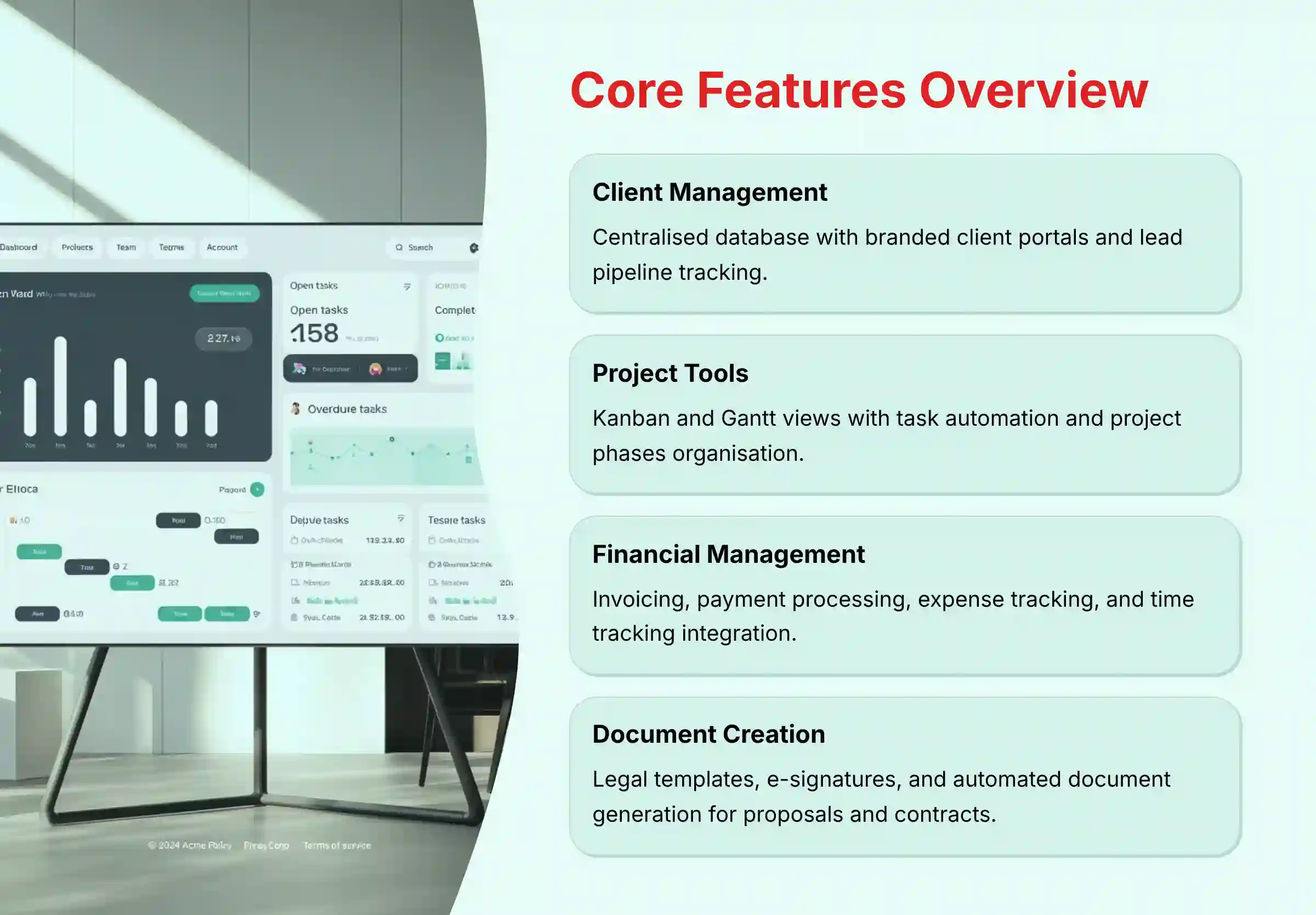
Bonsai organizes its features into clear categories that follow a freelancer’s typical workflow. This section breaks down what the platform offers in a direct, factual way. These features work together to create a single, connected system for managing your work and clients.
CRM and Client Management
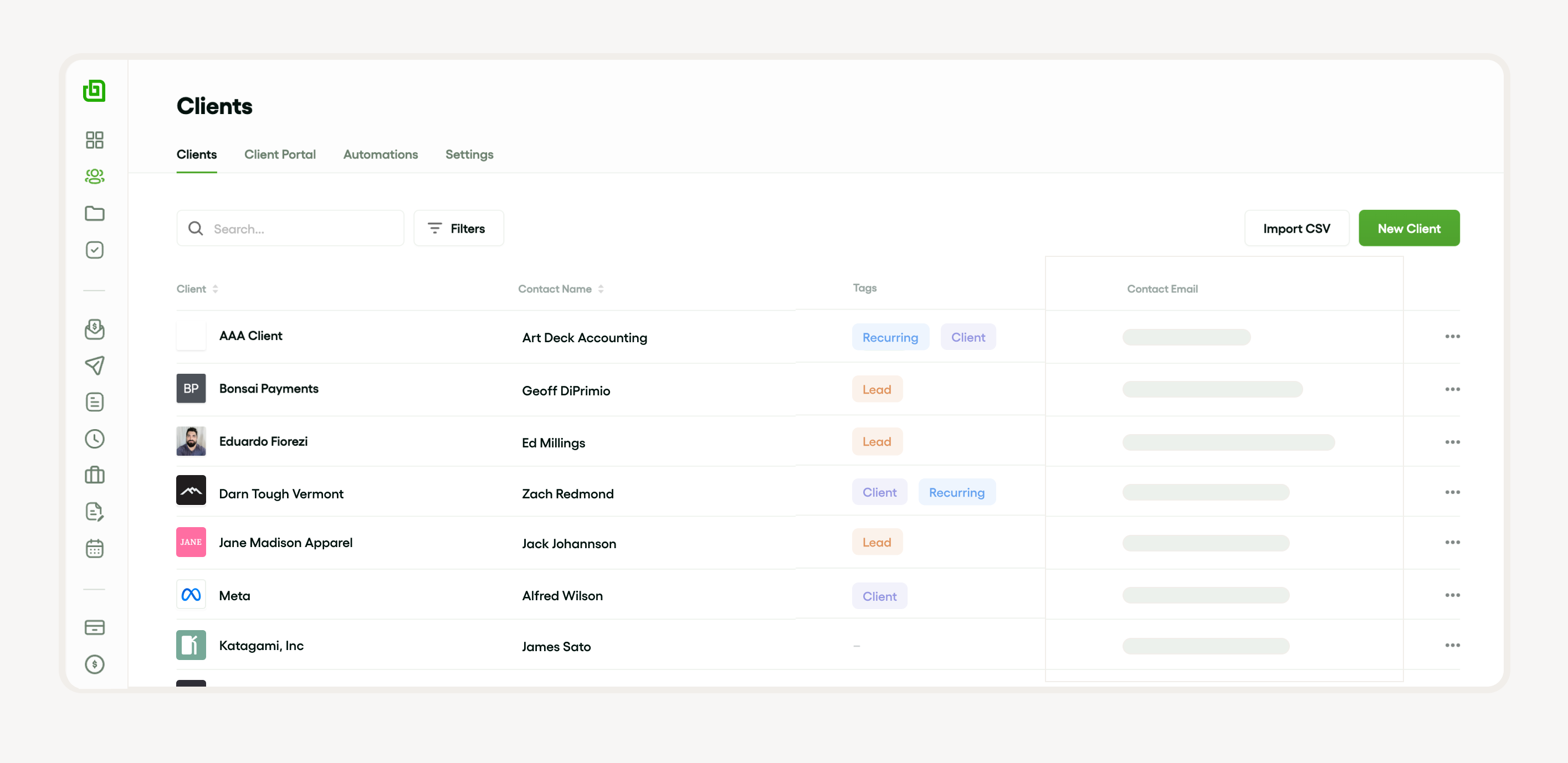
The client management tools are the foundation of Bonsai. They provide a central place to keep all your client information organized and accessible. This system is about managing relationships throughout a project’s life.
- Centralized Client Database: You can store all client information with custom fields and tags for easy organization.
- Branded Client Portal: This is a secure, private space where your clients can view documents, approve files, and check project status. It acts like a private digital meeting room for you and your client.
- Lead Management Pipeline: A simple visual pipeline helps you track potential projects from inquiry to contract.
- Intake Forms & Questionnaires: You can create custom forms to gather information from new clients in a structured way.
Project and Task Management
Once a contract is signed, Bonsai’s project management tools help you deliver the work. You can create an unlimited number of projects and tasks. These features are designed to keep your projects on schedule.
- Project & Task Creation: You can create unlimited projects and tasks to manage your workload.
- Visual Project Views: The platform offers both Kanban and Gantt chart views to help you see project progress.
- Task Automation: You can use templates, set up recurring tasks, and create dependencies between tasks.
- Project Organization: A 2025 feature called “Project Phases” allows for better organization of large projects.
Financial Management and Invoicing
Bonsai’s financial tools are powerful and connect directly to your projects and clients. The system helps you get paid on time and track your business’s financial health. It simplifies the money side of freelancing.
- Invoicing Capabilities: It supports standard, recurring, and subscription-based invoices.
- Payment Processing: The platform integrates with Stripe and PayPal to process online payments securely.
- Expense & Income Tracking: It automatically tracks and categorizes your income and business expenses.
- Time Tracking Integration: You can pull hours logged with the time tracker directly into an invoice.
Document, Proposal, and Contract Management
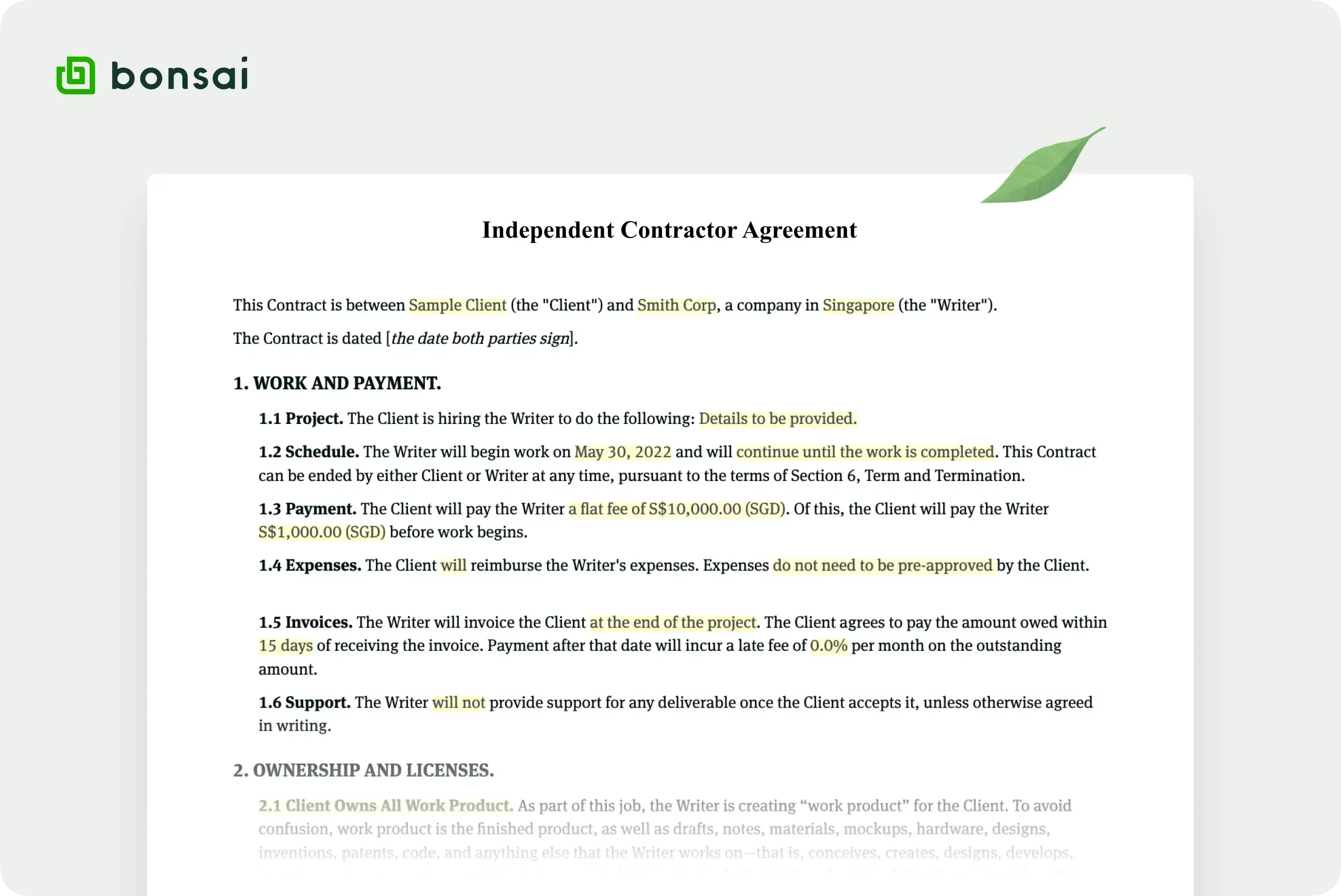
Creating professional documents is a core part of winning and managing clients. Bonsai offers a library of templates that have been reviewed by legal professionals. This helps you create solid agreements quickly.
- Template Library: You get access to customizable, pre-vetted templates for proposals and contracts.
- E-Signatures: The platform includes legally binding e-signatures for all contracts.
- Document Automation: It can automatically generate and send documents based on project milestones.
Looking for more guidance on implementing these features? Check out our detailed Bonsai Tutorials and Usecase guide for practical implementation tips.
AI and Workflow Automation
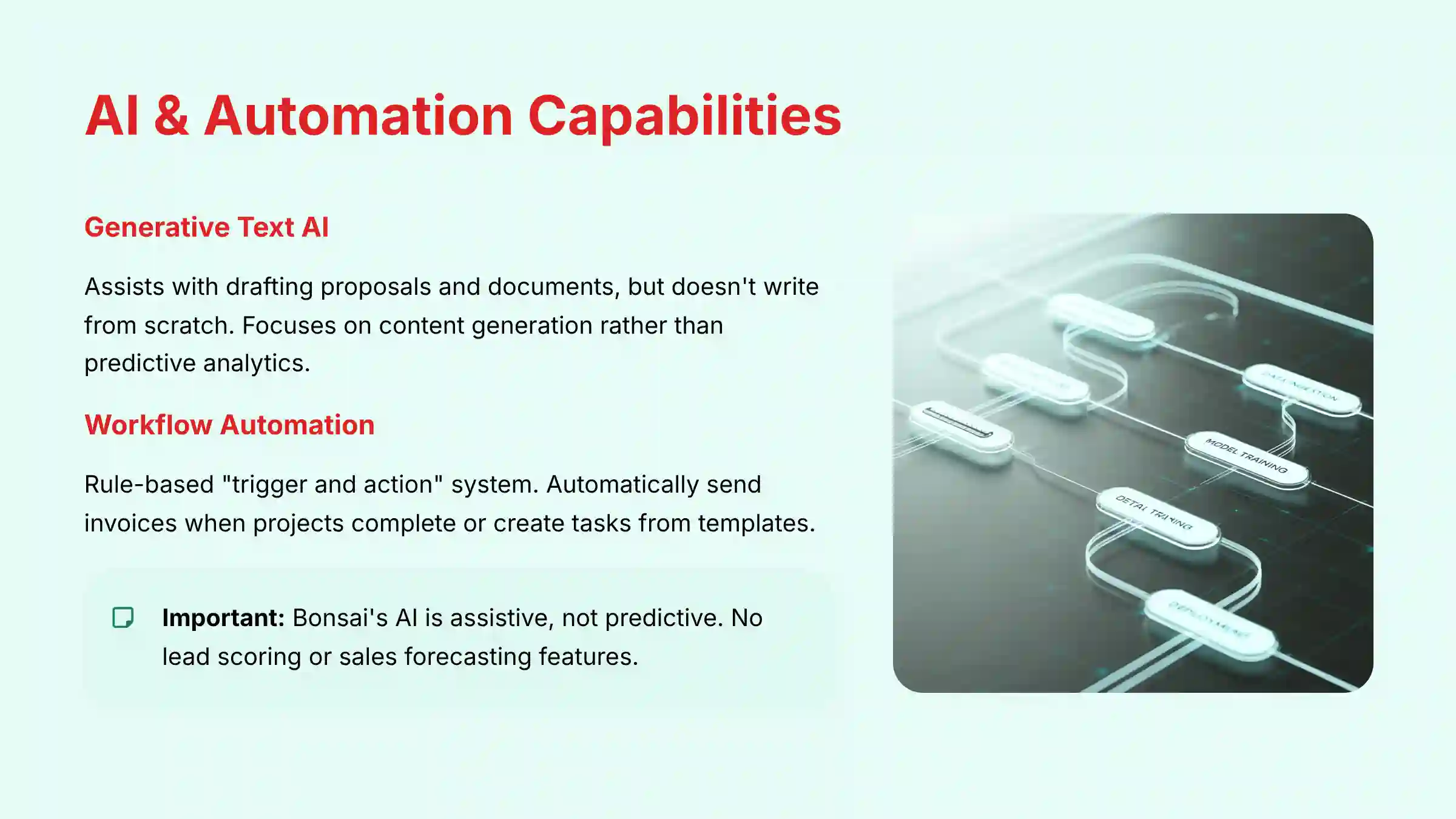
Bonsai uses AI to assist with administrative work. The main AI feature is a text generator that helps you write proposals and other documents. It also offers a rule-based system for automating repetitive tasks.
- Generative Text AI: This tool helps you draft document content, but it does not write them for you from scratch.
- Workflow Automation: You can set up “trigger and action” rules, like automatically sending an invoice when a project is marked complete.
Clarification: Bonsai’s AI is assistive, primarily for content generation (generative text). It does not include predictive analytics for sales forecasting or lead scoring, which are features found in more advanced, sales-focused AI CRMs.
Bonsai Pricing and Plans 2025: Which Tier Is Right for You?
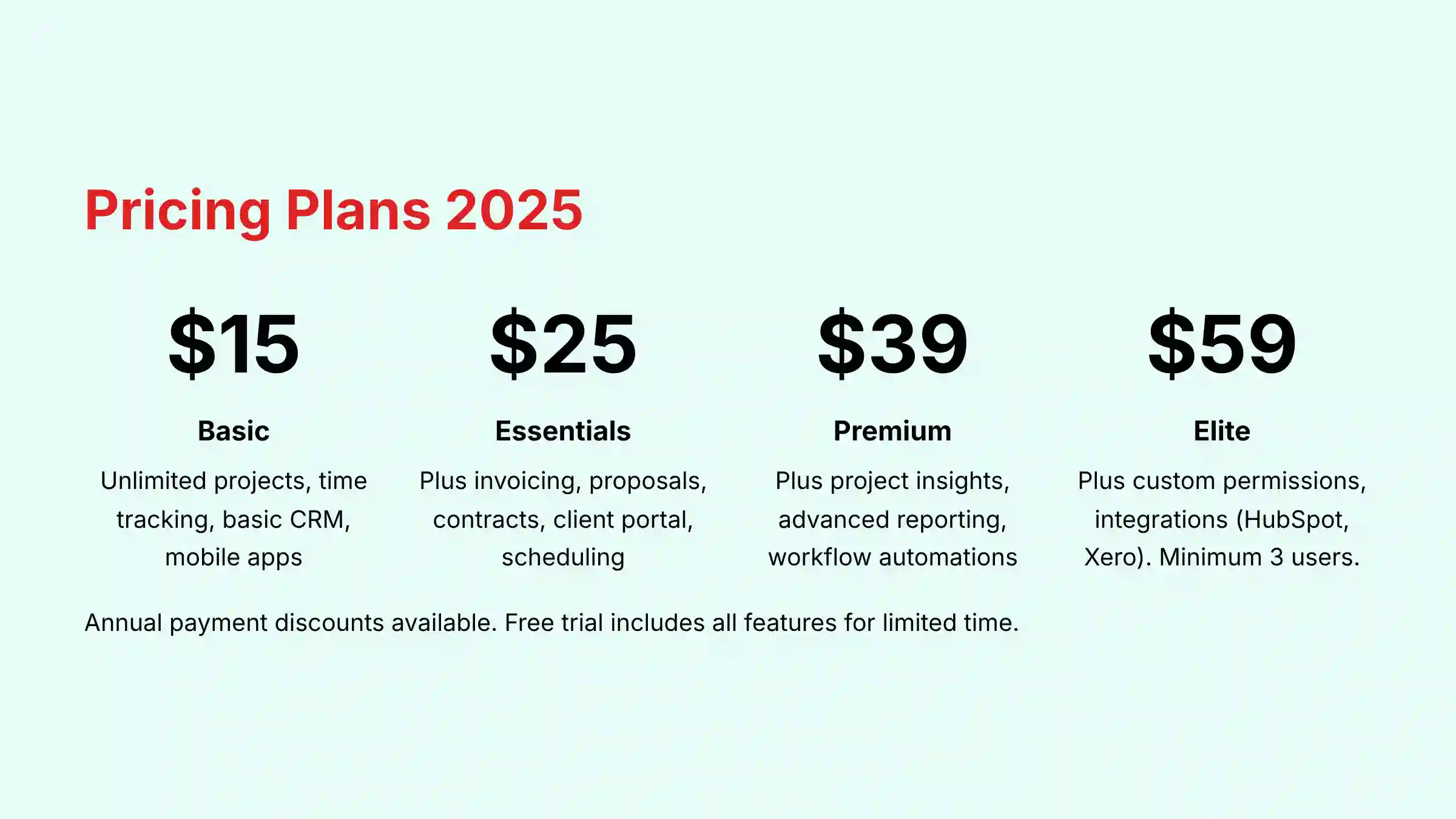
Bonsai offers several subscription tiers. Each plan is designed for a different stage of a freelancer’s or small business’s growth. There is no permanent free plan, but my testing confirms a free trial is available to test all features. You can get a discount if you pay annually.
Choosing the right plan depends on your specific needs. The Basic plan is good for starting out, while the higher tiers add powerful automation and financial tools.
| Plan | Price (USD/user/month) | Key Features |
|---|---|---|
| Basic | $15 | Unlimited projects & clients, Time tracking, Basic CRM, Mobile apps. |
| Essentials | $25 | Everything in Basic + Unlimited invoicing, Proposals & contracts, All templates, Client portal, Scheduling. |
| Premium | $39 | Everything in Essentials + Project insights, Advanced reporting, Workflow automations. |
| Elite | $59 | Everything in Premium + Custom permissions, Timesheet locking, Expense markups, Key integrations (HubSpot, Xero). |
Note: The Elite plan has a mandatory minimum of 3 users, making its starting cost $177/month. This is a critical consideration for teams comparing it to other platforms.
Objective Use Cases: The End-to-End Freelancer Workflow
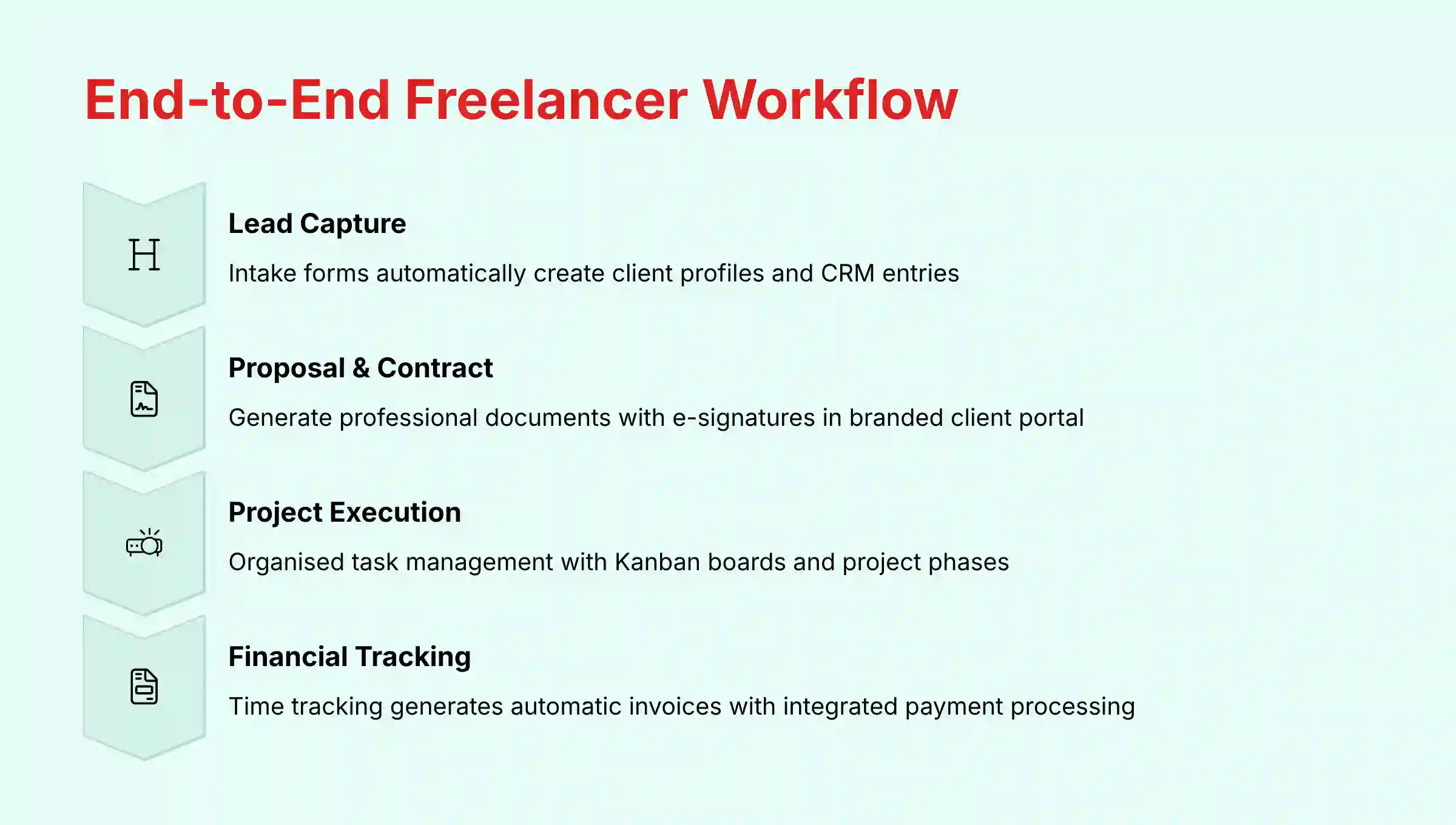
To understand how Bonsai works in practice, it is helpful to look at its primary intended workflow. The platform is designed to guide a project from the first contact to the final payment. This sequence shows how the features connect to solve real-world problems for a freelancer.
- Lead Capture & Onboarding
A freelance consultant embeds a Bonsai intake form on their website. When a potential client fills it out, a new client profile and lead entry are automatically created in the CRM. This starts the client relationship inside the platform.
- Proposal & Contract Phase
Using a saved template, the consultant generates a professional proposal and contract. The client receives it in their branded client portal and can e-sign it immediately. This secures the project and creates a legal agreement.
- Project Execution
Once the contract is signed, the project is created. The consultant uses task templates to lay out the project phases and tracks progress on the Kanban board. All project activity happens in one organized space.
- Financial Tracking
Billable hours are logged using the time tracker. An invoice is automatically generated from the tracked time and sent to the client based on a pre-set schedule. This makes getting paid simple and predictable.
For those considering alternatives, our Bonsai Top Alternatives and Competitors comparison provides insight into how other platforms handle similar workflows.
Integration and Automation Capabilities
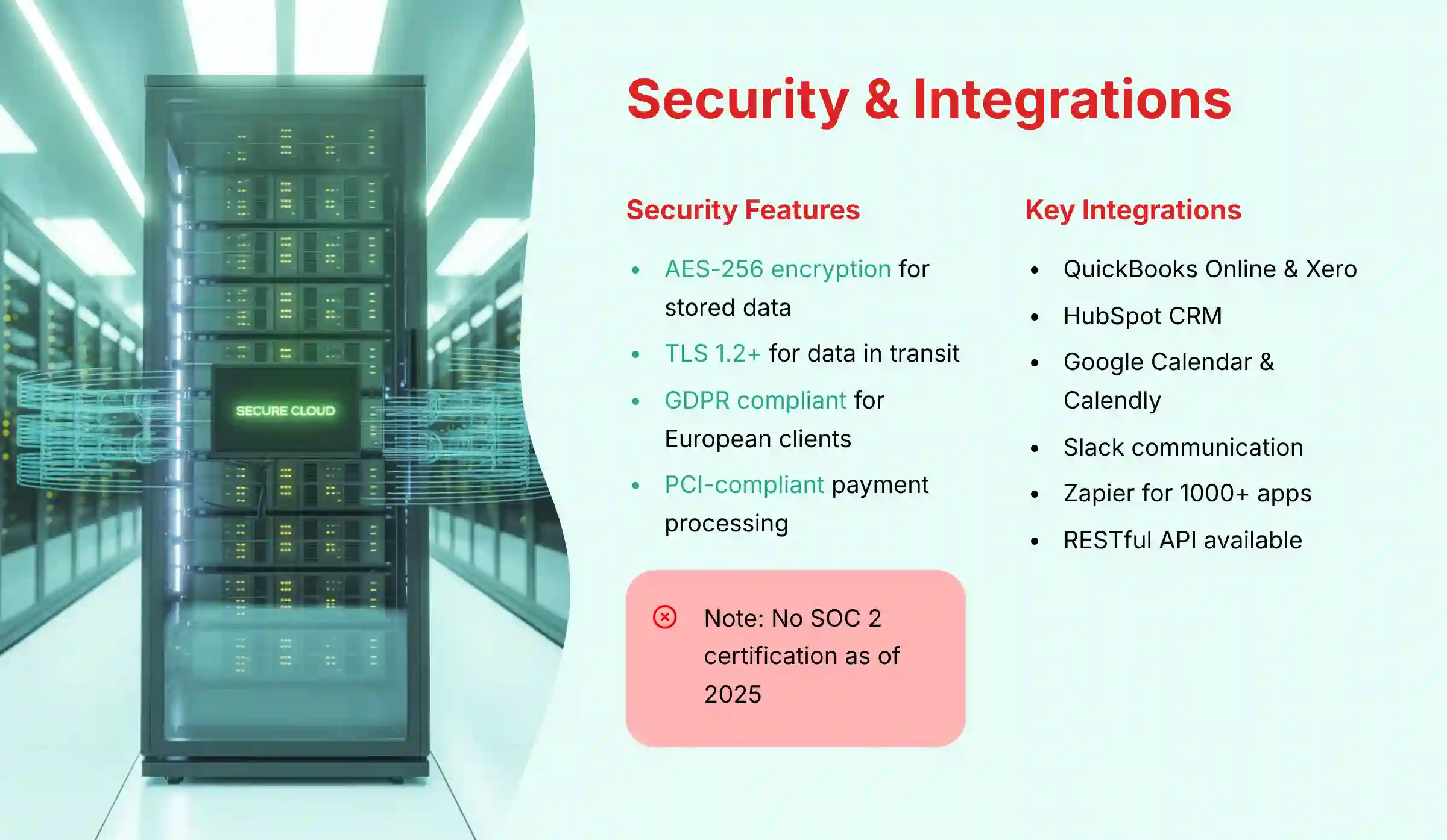
Bonsai can connect to other tools in your workflow. This is important for creating an efficient business process. It supports direct connections, third-party automation, and custom development through its API.
Native Integrations
These are direct, built-in connections to other popular software. My analysis shows they are simple to set up and maintain.
- QuickBooks Online
- Xero
- HubSpot CRM
- Google Calendar
- Slack
- Calendly
Third-Party Automation via Zapier
Zapier acts as a universal translator for software, connecting Bonsai to thousands of other applications. For example, you can automatically create a Trello card when a new task is added in Bonsai. This opens up many possibilities for automation.
API Availability
Bonsai offers a public RESTful API for developers. This allows for building custom integrations or workflows that are specific to your business needs. But this does require technical skill.
For developers: The Bonsai API provides CRUD operations for key data objects. This allows for building custom integrations but requires technical expertise. The API documentation can be found at api.hellobonsai.com.
Security, Compliance, and Data Privacy
Protecting client data is extremely important. As part of my evaluation, I always verify a tool’s security and compliance measures. Bonsai has several protections in place for your business and client information.
- Data Encryption: The platform uses AES-256 encryption for your data when it is stored (at rest). It also uses TLS 1.2+ to protect data when it moves over the internet (in transit).
- Compliance Certifications: Bonsai is fully GDPR compliant, which is a key requirement for working with clients in Europe. However, it is important to note that Bonsai does not hold an official SOC 2 certification as of 2025. This may be a consideration for businesses required to work with SOC 2 certified vendors.
- Payment Security: Payment processing is managed by PCI-compliant services like Stripe and PayPal. Bonsai does not store any credit card data on its own servers.
Professional Recommendation: For businesses with strict compliance requirements or handling sensitive client data, we recommend consulting with your compliance officer or IT security professional before implementation. The lack of SOC 2 certification may impact suitability for certain regulated industries.
Technical Specifications and System Requirements
Bonsai is a cloud-based tool, so its technical requirements are minimal. You do not need any special hardware or software to use it. This makes it accessible for nearly any solopreneur or small business owner.
- Supported Platforms: You can access it on the web with any modern browser. There are also native mobile apps for both iOS and Android.
- System Requirements: All you need is a stable internet connection.
- Output Formats: You can export documents as PDFs and financial data as CSV/Excel files for your records.
Known Limitations and Scalability
To make an informed decision, you must understand a tool’s limitations. My hands-on testing confirms that while Bonsai is excellent for its target user, it is not the right fit for everyone. Being aware of these limits prevents future problems.
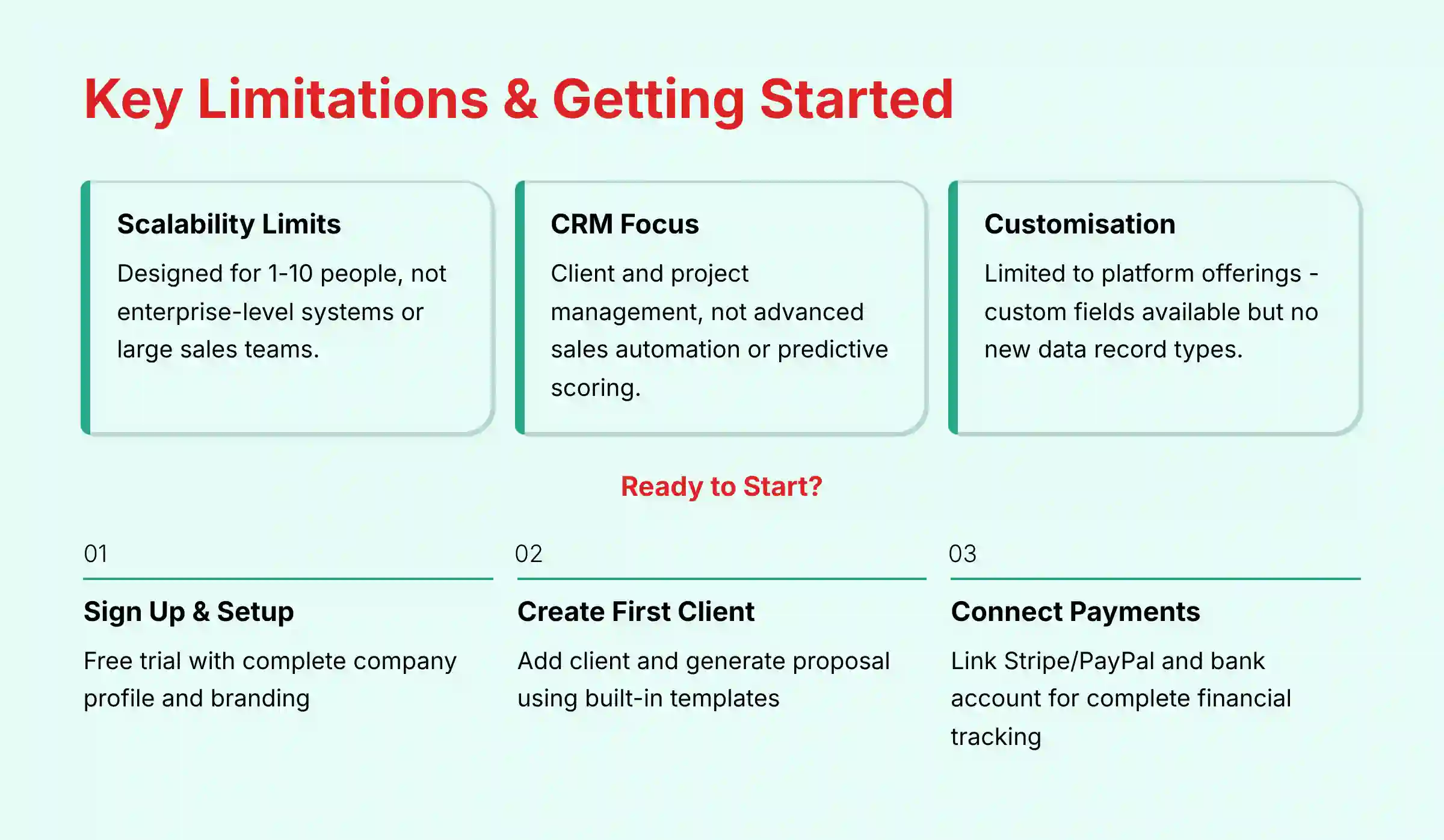
- Scalability: The platform is built for individuals and small teams of 1-10 people. It is not designed to replace enterprise-level systems for larger companies.
- CRM Functionality: Its CRM is for managing clients and projects. It does not have advanced sales automation like predictive lead scoring that you would find in dedicated sales CRMs.
- Customization: Customization is limited to what the platform offers. You can add custom fields to clients and projects, but you cannot create entirely new types of data records.
- AI Limitations: The AI functionality is limited to content generation assistance. It does not provide predictive analytics, autonomous decision-making, or advanced automation capabilities found in enterprise AI CRM solutions.
Getting Started with Bonsai: A 3-Step Guide
Starting with Bonsai is a straightforward process. The platform is designed to get you up and running quickly. Here is a simple guide to get started.
- Account Creation & Setup
First, sign up for the free trial on the Bonsai website. You will then complete your company profile, which includes your business name, logo, and address. This information will appear on your invoices and contracts.
- Create Your First Client and Proposal
Next, add a client to your database. Then, use one of the built-in templates to create your first proposal. This helps you get familiar with the document editor and client portal.
- Connect Your Financials
Finally, connect your payment processor, either Stripe or PayPal. This step is necessary to accept online payments through your invoices. You should also connect your bank account to use the expense tracking features.
Frequently Asked Questions (FAQ)
- Is Bonsai a true AI CRM?
Bonsai uses AI for generative text and rule-based automation. It is not a predictive AI CRM and does not have features like AI-powered lead scoring.
- Can I use Bonsai for free?
No, Bonsai does not have a permanent free plan. It offers a free trial that provides access to all features for a limited time.
- Who owns the data I put into Bonsai?
You own your data. Bonsai’s terms of service state that users keep ownership of their client data, documents, and other content.
- Is Bonsai suitable for a team of 20 people?
No, Bonsai is designed for individuals and small teams, typically under 10 people. It does not have the scalability or user management features needed for larger teams.
- What is the main difference between Bonsai and HubSpot?
Bonsai is an all-in-one platform for freelancers covering projects and financials. HubSpot is a sales and marketing-focused CRM designed for business growth and pipeline management.
- Are the contracts in Bonsai legally binding?
Yes, the contracts use legally binding e-signatures that are compliant with U.S. and international laws. However, for mission-critical or high-value contracts, we recommend having templates reviewed by legal counsel before implementation.
- Can I export my data from Bonsai?
Yes, you can export key data such as client lists and financial reports. More advanced data export and import options are available on higher-tier plans.
- Does Bonsai integrate with accounting software?
Yes, Bonsai offers native integrations with QuickBooks Online and Xero on its higher-tier plans (Elite) to sync financial data.
For additional questions and detailed answers, visit our comprehensive Bonsai FAQs section.
Disclaimer
Technology Evolution Notice: The information about Bonsai Overview and Features and AI CRM Software tools presented in this article reflects our thorough analysis as of 2025. Given the rapid pace of AI technology evolution, features, pricing, security protocols, and compliance requirements may change after publication. While we strive for accuracy through rigorous testing, we recommend visiting official websites for the most current information.
Professional Consultation Recommendation: For AI CRM Software applications with significant professional, financial, or compliance implications, we recommend consulting with qualified professionals who can assess your specific requirements and risk tolerance. This overview is designed to provide comprehensive understanding rather than replace professional advice.
Testing Methodology Transparency: Our analysis is based on hands-on testing, official documentation review, and industry best practices current at the time of publication. Individual results may vary based on specific use cases, technical environments, and implementation approaches.
For a complete reference, you can always revisit this guide on Bonsai Overview and Features.
Want to dive deeper into Bonsai’s capabilities? Our detailed Bonsai Review provides an in-depth analysis of its performance and value proposition for freelancers and small businesses.




Leave a Reply